







A Hidden Subterranean Town
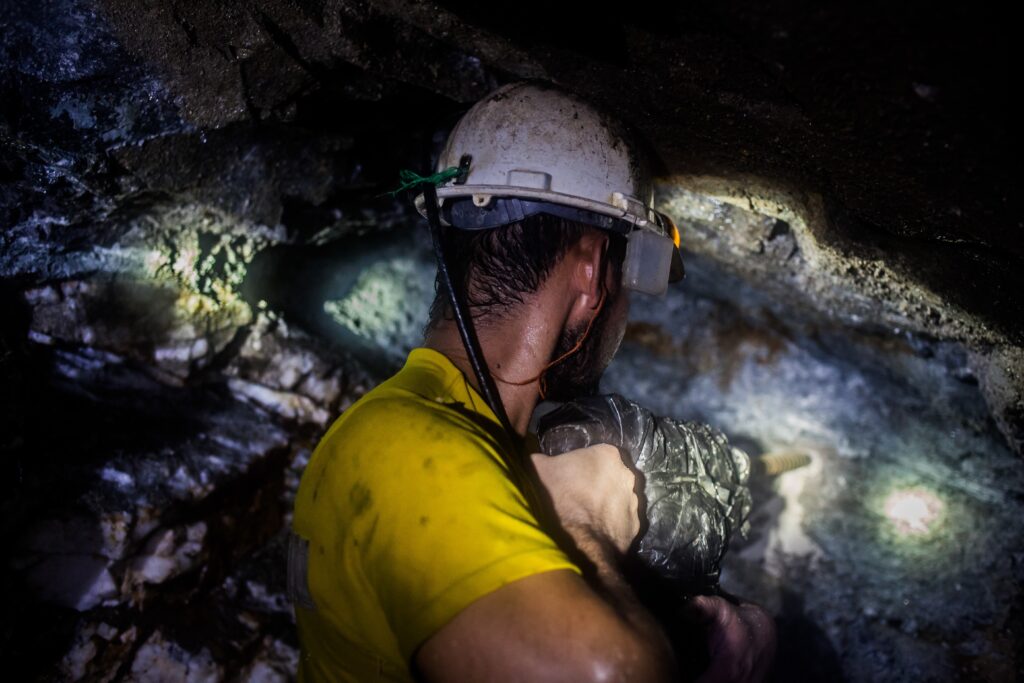
Deep beneath the surface in an abandoned gold mine in South Africa, a self-sustaining community has emerged, run by gangs. Here, Ndumiso, along with about 600 other men, lives and works in what could be called a “town,” complete with its own markets and a red-light district.
Becoming a Zama Zama
Ndumiso, who spoke to the BBC on condition of anonymity due to fear of reprisals, explained that after being laid off by a major mining company, he chose to join the underground world of the gangs to become an illegal miner, or “zama zama.” He mines for gold, surfacing every few months to sell it on the black market at a significant profit, though the risks are now far greater.
“The life underground is brutal. Many do not make it out alive,” he said, describing one level of the mine as a “zama zama graveyard,” filled with the remains of those who didn’t survive.
Despite the dangers, for those like Ndumiso who manage to endure, the job can be financially rewarding. He has used his earnings to purchase a house in Johannesburg, which he expanded, and to fund his children’s education, with one now at university.

The Economics of Illegal Mining
Ndumiso said he preferred this labor-intensive work over engaging in street crime, after years of fruitless job searches. He currently works at a mine in Stilfontein, a small town about 145km south-west of Johannesburg, which has recently come under global scrutiny.
The government, led by Minister Khumbudzo Ntshavheni, has vowed to “smoke out” the miners, blocking food and water supplies to the mine. “Criminals are not to be helped. Criminals are to be persecuted,” Ntshavheni stated.
A campaign group, The Society for the Protection of Our Constitution, has filed a lawsuit to ensure miners receive essential supplies, a request the court has temporarily granted.
The Government’s Crackdown
Ndumiso, who surfaced before the current standoff, is now observing the situation, unsure of his next move. This conflict arises from the government’s efforts to control an industry increasingly dominated by criminal gangs.
The decline of South Africa’s mining sector over the last three decades has led to widespread layoffs. Many like Ndumiso, once legally employed, have turned to illegal mining. According to researcher David van Wyk, there are around 6,000 such abandoned mines, viable for small-scale operations like those of the zama zamas.
“The country has been grappling with the scourge of illegal mining for many years, and mining communities have suffered from peripheral criminal activities such as rape, robbery, and damage to public infrastructure,” said Mikateko Mahlaule, chairman of the parliamentary committee on mineral resources.
The Risks and Rewards
President Cyril Ramaphosa labeled the mine a “crime scene,” but police are negotiating with the miners to end the standoff rather than immediately arresting them, given information that some miners might be heavily armed.
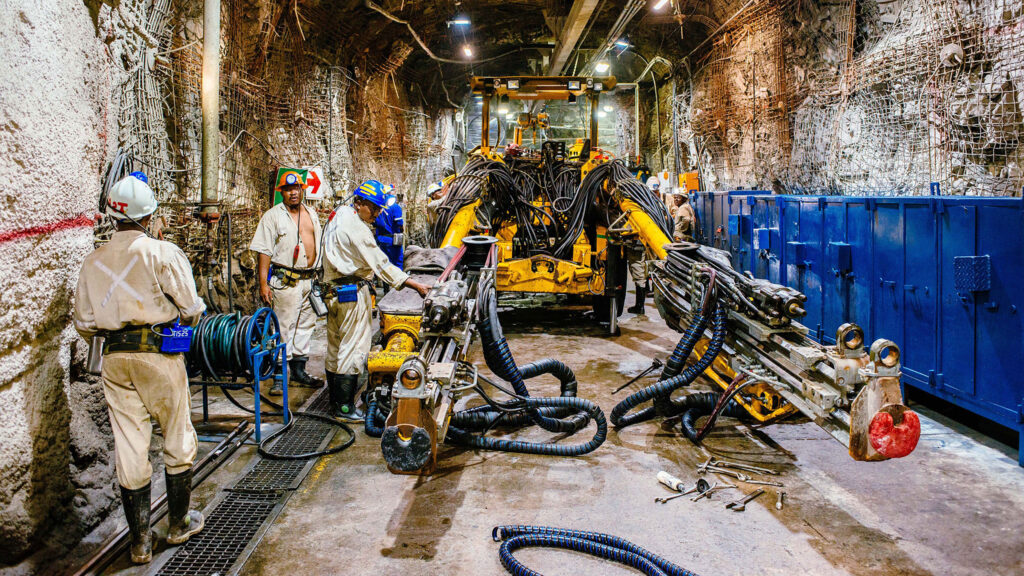
Ndumiso said he used to work as a drill operator, earning less than $220 monthly, until he was laid off in 1996. After struggling for two decades to find steady work due to high unemployment rates, he chose this illegal path.
He explained that he pays a monthly “protection fee” to his gang, which provides him with security, though at a cost. Under the 24-hour protection of the gang, he uses dynamite and basic tools to mine gold, handing most of it over to the gang leader for biweekly payments. He keeps some for personal sales, earning a substantial income every few months.
Life Underground
Ndumiso normally stays underground for about three months at a time, then surfaces for two to four weeks to spend time with his family and sell his gold before returning to the deep pits. “I look forward to sleeping on my bed and eating home-cooked meals. Breathing in fresh air is an amazingly powerful feeling,” he said.
He recalled that once when he reached the surface: “I was so blinded by the sunlight that I thought I had gone blind.” His skin had also become so pale that his wife took him for a medical check-up: “I was honest with the doctor about where I lived. He did not say anything, and just treated me. He gave me vitamins.”
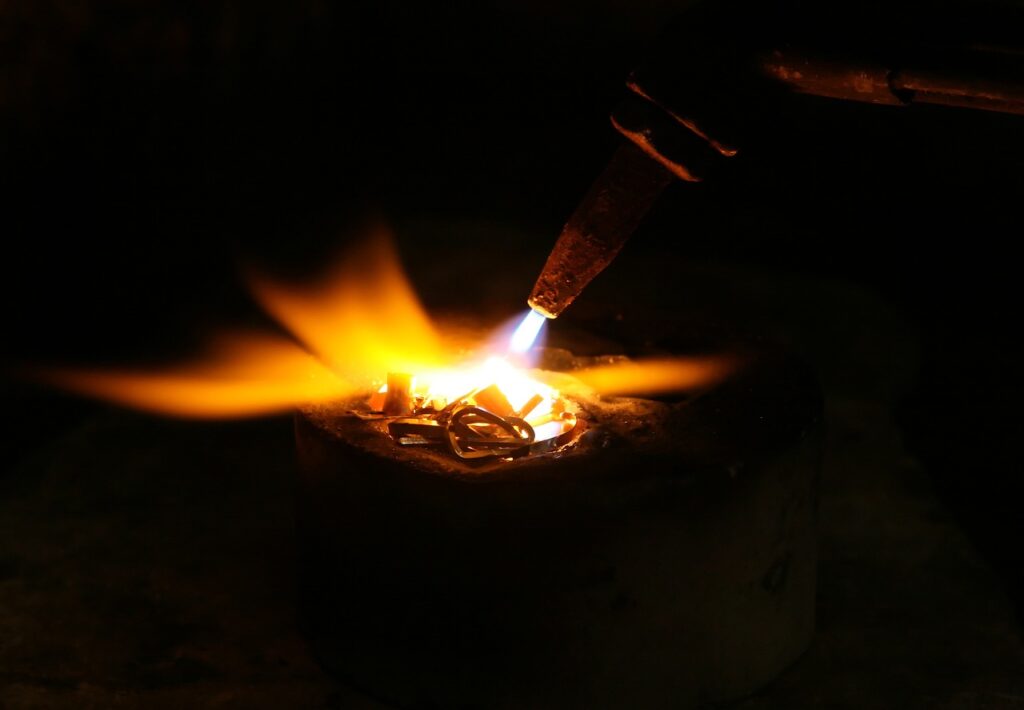
Above ground, Ndumiso does not just relax. He works with other illegal miners as ore-bearing rocks brought up from below are blasted and crushed into fine powder, then “washed” at a makeshift plant to separate the gold using dangerous chemicals like mercury and sodium cyanide.
Ndumiso said he then sells his share of the gold – one gram for $55, less than the official price of about $77. He has a ready-made buyer, whom he contacts via WhatsApp. “The first time I met him, I did not trust him, so I told him to meet me in the car park of a police station. I knew I would be safe there. Now we meet in any car park. We have a scale. We weigh the gold on the spot. I then hand it over to him, and he pays me in cash,” he said, pointing out that he walks away with between $3,800 and $5,500 every three months.
The Broader Implications
President Ramaphosa highlighted the economic cost of illegal mining, stating that it was costing “our economy billions of rands in lost export income, royalties, and taxes.” He added that the government would continue to work with mining firms to ensure they take responsibility for rehabilitating or closing mines that are no longer operational.
Van Wyk argued that the government’s crackdown on the “zama zamas” could worsen South Africa’s economic crisis. “There should be a policy to decriminalize their operations, to better organize them and to regulate them,” he suggested.
When Ndumiso returns underground to work, he takes with him cartons of canned food to avoid paying the exorbitant prices at the “markets” that exist there. Apart from food, basic items like cigarettes, torches, batteries, and mining tools are sold there, he said.
This suggests that a community, or a small town, has developed underground over the years, with Ndumiso saying there was even a red-light district, with sex workers brought underground by the gangs.
The mine where he works is made up of several levels, and a labyrinth of tunnels that connect to each other. “They are like highways, with signs painted to give directions to different places and levels – like the level that we use as the toilet, or the level that we call the zama-zama graveyard,” he said.
Although life underground is perilous, it is a risk that thousands like Ndumiso are willing to take, as they say the alternative is to live and die poor in a nation where the unemployment rate stands at more than 30%.